
Using Artificial Intelligence to speed up MRI scans in NHS Highland
Endowment funding case study - research, development and innovation.
On this page
Identifying the need
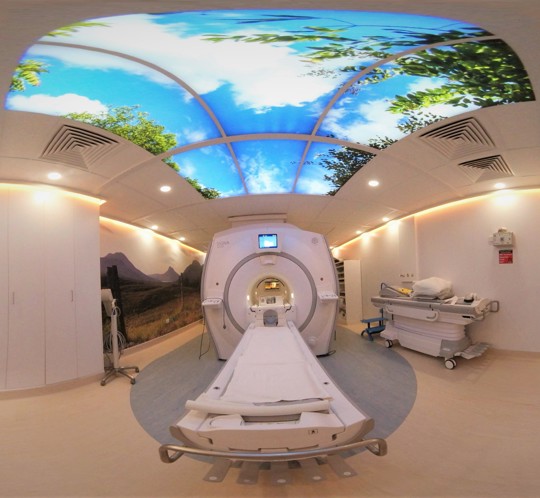
Magnetic Resonance Imaging (MRI) is a scanning technique that uses a strong magnetic field and radio waves to create detailed pictures of the inside of the body. When someone is sent for an MRI scan, the person who refers them writes a short note explaining why the scan is needed. A radiographer or radiologist then reads this note and chooses the right type of scan. This step is called protocolling, and it currently has to be done by hand.
As Dr John Tracey explained, “this process… is a manual one… taking up precious work hours which otherwise can be used for patients.”
The team believed that, because these referral notes are often written in a similar way, an AI tool could help make this process faster. If successful, it could save around 300 staff hours a year, giving staff more time for patient care.
The challenge on the ground
The idea sounded simple, but the real NHS environment made it harder. John shared that “the main hurdle to overcome is data availability”.
The team collected 7,275 MRI referrals to train the AI tool, but some scan types didn’t have enough examples. They also needed to ensure the system was safe. Any suggestion made by the AI would still require a check by a scanning radiographer before a patient would be scanned, meaning the project could demonstrate low risk while still providing sizeable benefit to the service.
How we responded
The project was awarded £7,618.48 through our Research and Development funding. The team presented their idea at a live Dragon’s Den‑style event in Inverness on 25 February 2025 and began work in April 2025, completing the project within six months.
The project team built a simple two‑step AI tool:
- Step 1: The tool reads the referral note and decides which general area it belongs to - for example, brain, spine, or heart.
- Step 2: It then narrows this down to the exact type of scan needed.
This approach meant each part of the system could be improved over time as more data becomes available.
The change we achieved
The early results were very promising. For scan types with plenty of data, accuracy was extremely high:
- heart scans: 100% accuracy
- biliary system scans: 99.9%
- liver scans: 98.2%
Brain and spine scans achieved lower accuracy (73.6% and 79.7%), but they were still comparable to staff. In fact, when two radiographers independently chose brain and spine protocols, John shared “they only agreed with each other 70% of the time. This suggests our model is at least as good as humans carrying out the same task!”
This means the AI tool has real potential to safely support staff and reduce workload.
The journey ahead
This early project has given NHS Highland a clear picture of what AI can and can’t do with the data available today. As John put it, “we are not looking to develop a perfect model but rather one that is at least as good as the staff who are currently carrying out the task - our work suggests we have achieved that.”
Next steps include ongoing training and refining of the models with more data to better understand the capabilities. The team are aware of the need to introduce systems to bolster against errors, ensuring a safe roll-out. A research paper for publication has been written to share what the team have learned with others across the health service.
Support NHS Highland Charity
 NHS Highland Charity supports projects that improve comfort, care and wellbeing for patients, families and staff across Highland and Argyll and Bute. If you would like to support work like this - through fundraising or a donation - we’d love to hear from you. Our team will help make sure your gift has the greatest possible impact and ensure donated items can be safely accepted for use on wards.