
Building a stronger volunteer service across NHS Highland
Endowment funding case study - workforce development.
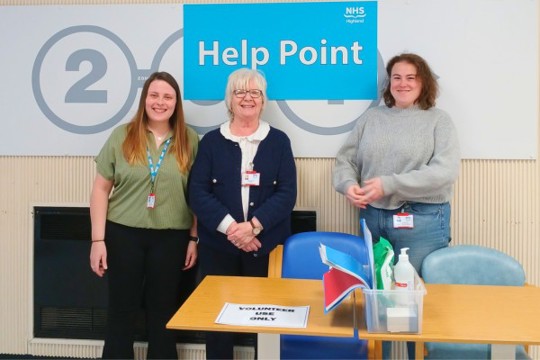
Image: Volunteer Coordinators Tasha Lundie and Ellie Andrews-Steele with volunteer Rose.
On this page
Identifying the need
For almost a decade, NHS Highland had a well‑established volunteer programme supporting patients and staff across parts of the Highland area. However, the programme was heavily reliant on a single Volunteer Manager, creating challenges for sustainability and limiting the ability to grow or respond to demand for volunteering services.
There were also significant inequalities in access. Some hospitals and services benefited from regular volunteer support, while others had little or none. Most notably, Argyll and Bute had no direct access to the NHS Highland Volunteer Programme, meaning patients and staff in those communities were missing out on the non‑clinical, person‑centred support volunteers can provide.
After COVID, volunteer numbers had reduced. Some hospital sites had not restarted their volunteer services and staff capacity was stretched. At the same time, the need for companionship, reassurance and meaningful activity for patients, particularly those experiencing isolation or long hospital stays was greater than ever.
The solution was clear: increase capacity within the volunteer service so it could recover, grow, and reach the people and places that needed it most.
The challenge on the ground
NHS Highland covers vast, rural geographies. Supporting volunteers across multiple sites requires time, travel and strong local relationships. Recruitment levels varied by area, and the loss of volunteers - particularly during recovery from the pandemic - created additional challenges.
In Argyll and Bute, the challenge was even greater. The Volunteer Coordinator role had to develop a service from the ground up, often working alone across a large rural region with frequent travel between hospital sites.
Across both areas, limited promotional resources and the need to balance recruitment, training and ongoing volunteer support meant progress required persistence, flexibility and strong collaboration with clinical teams.
How we responded
With funding from NHS Charities Together and NHS Highland Charity, two Volunteer Coordinator posts were created for two years:
- one serving the Highland area
- one serving Argyll and Bute
These roles transformed the capacity of the volunteer service. The coordinators focused on:
- recruiting, training and supporting volunteers
- re‑establishing services in hospitals that had not returned post‑COVID
- embedding volunteers safely and effectively in clinical settings
- developing inclusive volunteering opportunities, including support for people with Additional Support Needs (ASN), neurodivergent volunteers, older adults and people with mental health challenges
- building strong relationships with ward teams, Senior Charge Nurses and third‑sector partners
By December 2025, 180 new volunteers had been recruited, helping to rebuild and extend services across hospitals in our region.
“Having the capacity to be present on wards, to support volunteers properly, and to build trust with staff made all the difference. It allowed the service to recover and then grow.”
Tasha - Volunteer Coordinator, Highland
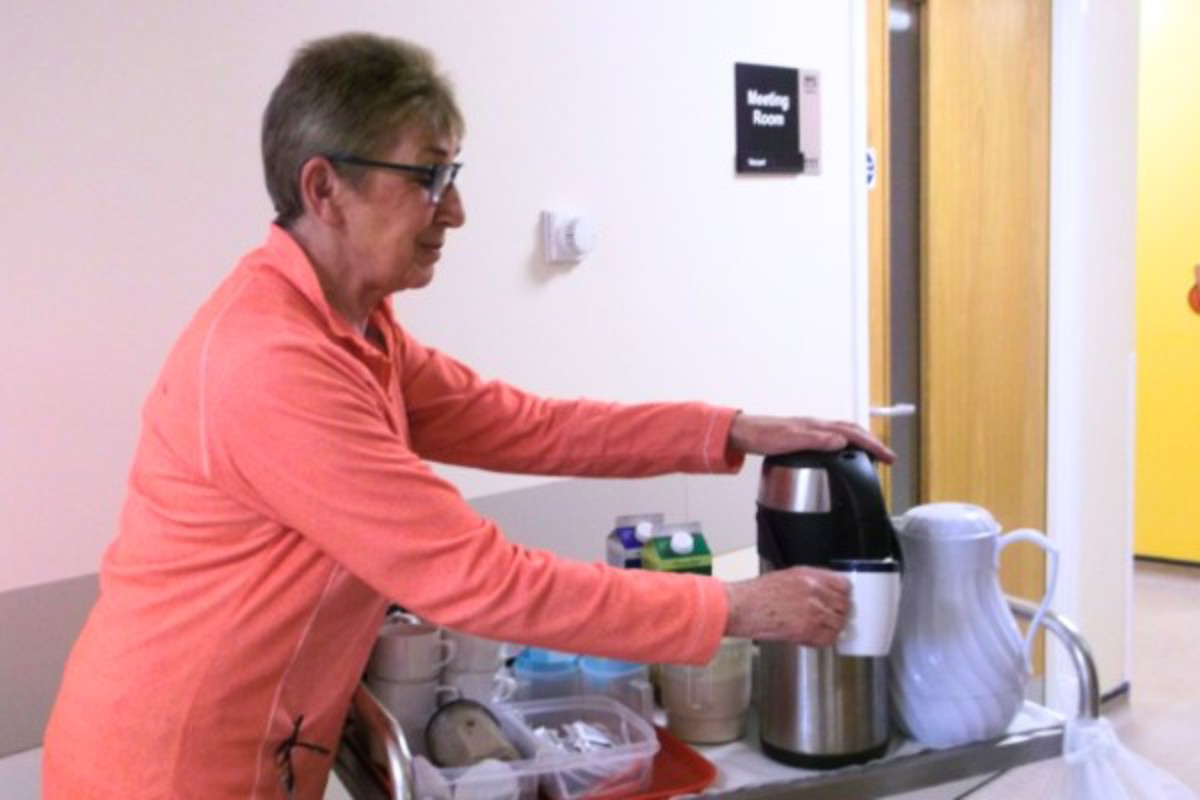
Image: Barbara, a volunteer in Nairn Town and County Hospital.
The change we achieved
The impact of the project was felt by patients, families, volunteers and staff. Volunteers provided companionship, reassurance and meaningful activities for patients, particularly those who were isolated, living with cognitive impairment, or experiencing long hospital stays.
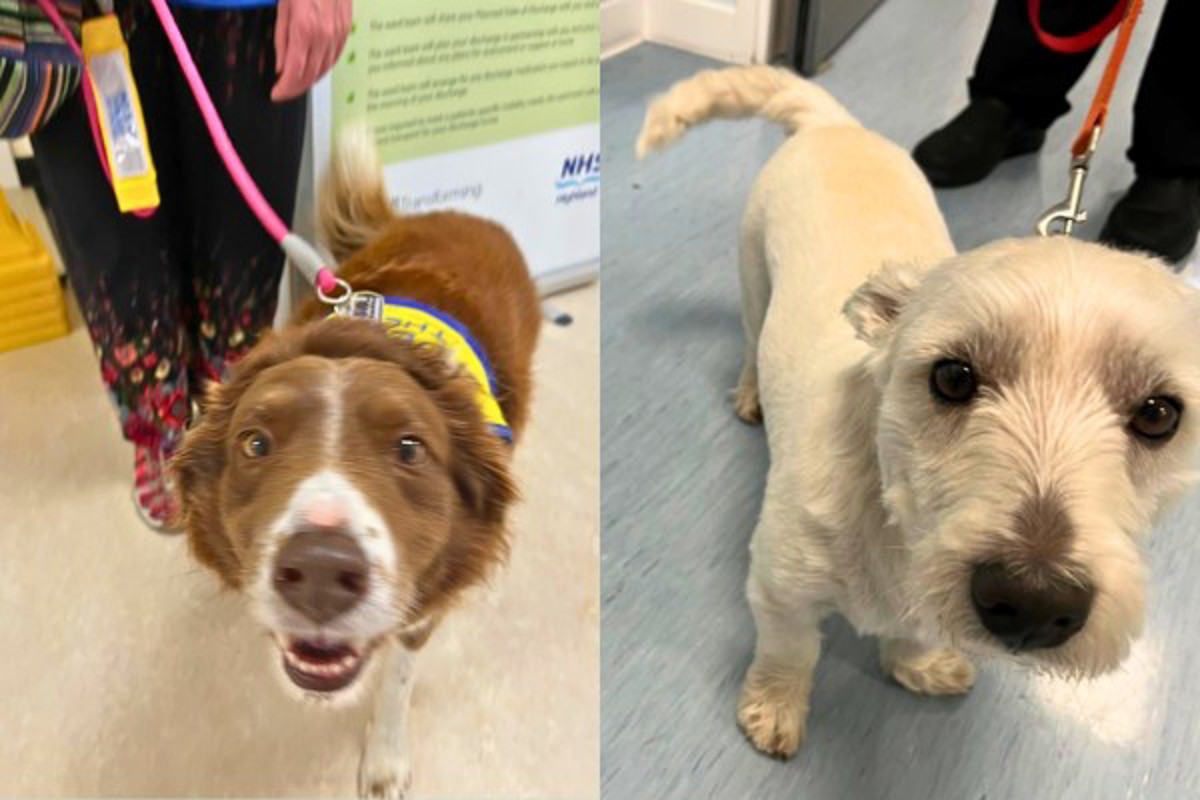
Simple interactions such as conversation, games, creative activities or a visit from a therapy dog brought comfort and dignity to people at a vulnerable time in their lives.
At the same time, volunteers supported ward routines by helping with mealtimes, hot drinks trolleys, wayfinding and outpatient support, freeing up valuable staff time and easing pressure in busy clinical environments.
"The introduction of Pets-as-Therapy volunteers across two sites has made such a brilliant addition to the volunteer service. In one location, the weekly visit of a Collie dog made the day of a long-term patient whose own dog had sadly died during his time in hospital. He is an avid dog-lover and having that visit each week helped keep his spirits up and help his rehabilitation. Staff commented how much perkier he appeared after a visit and that it was a joy to see how the visits benefited him."
Ellie - Volunteer Coordinator, Argyll and Bute
“A long-term inpatient recovering from a stroke faced reduced mobility on one side and had limited verbal communication abilities. A volunteer, who also had additional support needs and felt anxious about beginning their role in a ward environment, was supported to transition into a creative volunteering position that highlighted their strengths. During weekly sessions, the volunteer led a small group activity in a day room, assisting patients with colouring and drawing.
They observed that the stroke-affected patient struggled to express their preferences, so they took the initiative to create a simple colour chart to aid in decision-making. Additionally, the volunteer designed personalised colouring sheets based on the patient's interests, fostering rapport and maintaining engagement for several months. Over time, the patient’s confidence and skill in writing and drawing with the affected side noticeably improved.”
Tasha - Volunteer Coordinator, Highland
Image: Two of the therapy dogs who visit patients and staff in Argyll and Bute.
The journey ahead
Although the funded project completed in April 2026, its impact will continue. Volunteer services are now established in areas that previously had no provision, with trained volunteers, stronger staff relationships and greater awareness of the value volunteering brings to patient care.
The project has also generated valuable learning. A phased approach to expansion, earlier partnership working with third‑sector organisations, and improved promotional resources will all strengthen future volunteering initiatives.
Most importantly, the project has shown what is possible when charitable funding enables the NHS to go above and beyond, supporting recovery, reducing pressure on services and improving experiences for patients, families and staff across some of Scotland’s most rural communities.
“This project didn’t just restart volunteering, it reshaped it, and that legacy will carry on. We’re very grateful to our partner in this project, NHS Charities Together.”
Catherine Myles - NHS Highland Charity Lead Officer
Support NHS Highland Charity
 NHS Highland Charity supports projects that improve comfort, care and wellbeing for patients, families and staff across Highland and Argyll and Bute. If you would like to support work like this - through fundraising or a donation - we’d love to hear from you. Our team will help make sure your gift has the greatest possible impact and ensure donated items can be safely accepted for use on wards.