
Contraception after having a baby
Your fertility (ability to get pregnant) can return very quickly after having a baby.
You can get pregnant as soon as 21 days after giving birth if you are not fully breastfeeding. This is why it’s important to start thinking about contraception before or soon after your baby is born.
On this page
Contraception planning
Unplanned pregnancies can happen in the first few months after giving birth, so it is important to have a plan for contraception that suits you. Some types of contraception can also help to improve your periods. This can be particularly helpful if you experience heavy, irregular, or painful periods.
There are many safe and effective contraception options available after having a baby, including methods you can start immediately. Choosing contraception helps you avoid an unplanned pregnancy and gives your body time to recover.
Why it is important?
You may or may not be planning another pregnancy in the future. If you are thinking about growing your family, research shows that leaving at least 12 months before becoming pregnant again has important benefits for you, your baby, and any future baby. Using contraception is the most effective way to give yourself this time between pregnancies.
- Your body needs time to recover after pregnancy, particularly if you experienced any complications such as high blood pressure.
- Babies also benefit from having a fit and well parent during their early years.
- Planning a gap before your next pregnancy can support the health of your future baby too, as research shows that adequate spacing between pregnancies is linked to better outcomes for both mother and baby.
You can get pregnant again very soon
- You can become pregnant again from as early as 3 weeks after birth.
- This can happen even if you are breastfeeding.
- It can also happen before your periods start again.
Breastfeeding
Breastfeeding alone is not a dependable method of contraception. Ovulation may resume unpredictably, and pregnancy can occur even before menstruation returns. There are several effective contraception methods that are safe to use while breastfeeding.
Getting the right support
Choosing the right contraception helps you stay in control of your health and plan your family in a way that works for you.
It’s a good idea to discuss your contraception plan before or soon after your baby is born. Some methods can be started straight after birth, while others can be started within a few weeks.
If you have questions, please speak to a healthcare professional who can talk to you about your options:
- your midwife
- your GP
- the Sexual Health service - read more about Postnatal contraception at Highland Sexual Health
Free condoms by post
A confidential service for NHS Highland area residents, offering free condoms delivered in plain packaging.
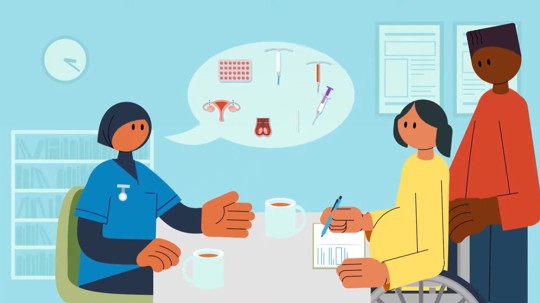
Postnatal contraception (video)
An animation which explains why it is beneficial for expectant parents to consider postnatal contraception as part of their routine birth plan.
Helping you choose the method of contraception
View or download Contraception after having a baby - Helping you choose the method of contraception that's right for you (pdf).
This information helps you consider your options for contraception after giving birth, including detailed information on:
- implant
- hormonal Intrauterine Device (IUD) - ‘hormonal coil'
- copper IUD - 'non-hormonal coil’
- injection
- Progestogen Only Pill (POP)
- Combined Hormonal Contraception (CHC)
- female sterilisation
- male sterilisation
See also What's right for me? from Contraception Choices - a decision aid which adds up scores for the questions to suggest three methods of contraception.
Please speak to your midwife or healthcare professional for more information.
Important: Sex and contraception after the birth - from NHS inform

Information from Ready Steady Baby!
- Take your time
- Having sex after birth
- Choosing a contraceptive
- Types of contraceptive
- Breastfeeding as a contraceptive
- Trying for another baby
- Information in other languages and formats