
Opening doors to independence
On this page
Endowment funding case study - enhancing care.
Identifying the need
For many patients at Raigmore Hospital, simply getting through a doorway could be a challenge. The Vascular Unit supports many new amputees, and the Prosthetics and Orthotics waiting area is where most patients use wheelchairs, walking aids, or prosthetic limbs.
While the existing manual doors met basic building and safety requirements, staff and patients recognised that the experience could be made more inclusive and supportive of independence.
The challenge on the ground
The heavy manual doors created barriers to comfort and ease of movement:
- Reduced independence: patients often needed assistance, particularly amputees and wheelchair users.
- Accessibility concerns: the effort required to open the doors could be tiring or awkward for those with mobility challenges.
- Patient experience: visitors described the department as “hard to navigate,” and some found entering the waiting area stressful or discouraging.
- Operational limitations: fire safety rules meant doors couldn’t be propped open to make access easier.
With Prosthetics and Orthotics hosting over 10,000 appointments annually, improving accessibility in these areas had the potential to make a meaningful difference to many people.
How we responded
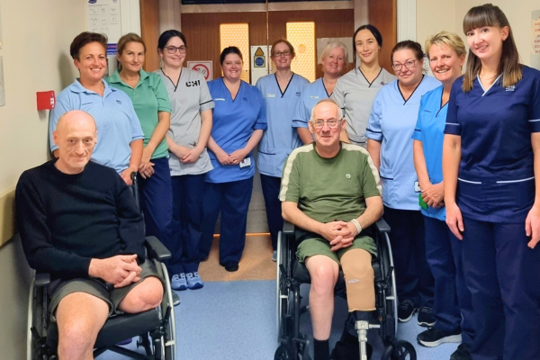
With charitable support, new automatic doors were installed at both the Vascular Unit (pictured) and the Prosthetics and Orthotics waiting area.
This modest but carefully focused project aimed to enhance patient comfort and independence beyond what standard capital budgets would typically provide. The new doors enable smoother, more dignified access for patients while supporting a calm, welcoming atmosphere in areas where people often begin their rehabilitation journey.
The change we achieved
For patients
- Greater independence and dignity, especially for new amputees learning to adapt to life changes.
- A more comfortable, accessible, and confidence-building environment.
- A more welcoming and person-centred experience when attending clinics.
One patient added, “As a new amputee, the doors have been a tremendous benefit, enabling independence without the need for assistance or porters. It has been a big help in my stay on the ward.”
For staff
- Time previously spent assisting patients with doors is now freed up for direct patient care.
- Staff morale improved by seeing patients more confident and independent.
“These doors have made a huge difference for my patients’ wellbeing. Benefits include improved accessibility, independence, safety, convenience, and hygiene. It has a significant role to ensure and create a more inclusive and person-centred environment.”
Kristina, Senior Charge Nurse, Vascular Unit
For NHS Highland
- Improved flow through busy waiting areas.
- Investment in accessibility supports the hospital’s wider commitment to inclusive, person-centred care.
The journey ahead
The success of these installations shows how relatively modest changes can make a huge difference to the hospital experience. As Raigmore continues to serve patients with complex mobility needs, the lessons learned here will guide future improvements in patient experience across the site.
By continuing to invest in projects that remove barriers, promote independence, and protect dignity, we can make sure that every patient feels safe, supported, and respected throughout their care journey.