
6 November 2026 - Annual Review
Chair: Angela Constance MSP
The NHS Highland Annual Review 2026 was held:
in-person at the Kilmallie Free Church of Scotland, Glenpane St, Caol, Fort William PH33 7AU
At the public session members of the community heard directly from the Cabinet Secretary for Health and Care, Angela Constance MSP, about the Board’s performance over the last year. People also heard about NHS Highland’s strategic priorities, and some of the challenges and opportunities health and social care services across Highland are experiencing.
a video of the meeting, and submitted questions and answers, are available on this page
read more about the Annual Review meeting at our Engagement Hub
On this page
Questions and answers
Can you advise whether healthcare services in the NHS Highland geographical area will continue to receive the same percentage of NRAC funding under the proposed system for two health boards in Scotland?
Detailed design work for NHS reform started in September 2026. Funding flows, including NRAC funding, form part of the finance work supporting the design work. Options for the future funding of NHS services and how funding arrangements will operate within the new model, will be considered as part of this programme of work.
Will NHS Highland work with Highland Council to jointly fund independent, community-based collective advocacy for at least three years, so people with lived experience can help shape local priorities and services?
Yes. We recognise the importance of independent advocacy in ensuring that people are heard and are able to influence decisions affecting their lives. NHS Highland already commissions both individual and collective advocacy services, and we are committed to continuing that provision. We are currently updating our Highland Advocacy Strategy, working with partners to consider the advocacy needs of our population and how these should shape future commissioning. That provides the right opportunity to consider the balance between individual, service-based collective and wider place-based advocacy, informed by lived experience and the particular needs of our remote and rural communities.
We also recognise the importance of providing greater stability for organisations delivering these services and will reflect that in our future commissioning arrangements.
We will continue to work with Highland Council and our advocacy and third-sector partners as the strategy and commissioning arrangements are developed. The detail of future provision and investment will need to be informed by that work, but our direction is clear: independent advocacy is an important part of supporting rights, participation and meaningful involvement in the design and delivery of services across Highland.
What plans do NHS Highland have to support the voluntary/third sector where they are providing the services that NHS Highland should be providing as a statutory responsibility?
NHS Highland recognises and values the vital role that independent, voluntary, community and third-sector organisations play in delivering care and support across Highland, particularly in remote and rural communities. Working in partnership with these organisations is an established and important part of how we deliver services, and we are committed to strengthening these partnerships. NHS Highland remains accountable for its statutory responsibilities, including where services are delivered through partnership or commissioned arrangements, and we are committed to ensuring that these arrangements are appropriately supported and sustainable.
We recognise that delivering sustainable services across a large and predominantly rural geography presents particular challenges. Workforce availability, financial pressures and changing needs mean that traditional models of service delivery will not always provide the best or most sustainable solution. This makes it increasingly important that we work alongside communities, independent providers and third-sector partners to develop services and support that reflect local circumstances.
NHS Highland, Highland Council and Highland Third Sector Interface have committed to developing a Highland Third Sector Strategy. This will provide an opportunity to develop a clearer, more strategic approach to our relationship with the third sector, including partnership working, commissioning and funding.
Community Wellbeing Hubs provide a practical example of this partnership approach, supporting locally accessible and preventative approaches to health and wellbeing. Our commitment to supporting and developing this model reflects the important role that community and third-sector organisations can play in responding to local need. Alongside this, we are working with the National Development Team for Inclusion on Community Led Support, recognising that solutions need to be developed with communities and reflect the very different circumstances of communities across Highland.
We recognise that short-term funding and uncertainty can make it difficult for voluntary and third-sector organisations to plan and sustain services. Our commitment is therefore to strengthen our strategic relationships with the sector, develop clearer and more sustainable commissioning and funding arrangements, and work with communities and partners to develop services that are sustainable, responsive to local need and clear about responsibilities and accountability.
Why is NHS Highland still developing its prescribing pathway for weight-loss medicines, more than two years after national criteria were published, and how will it make sure eligible patients get fair access, whichever GP practice they’re registered with?
The national guidance published in September 2024 set out who should be prioritised first: people with a BMI of 38 or above and at least one related condition, such as high blood pressure, sleep apnoea or prediabetes. What it did not do was create the services, staff or funding needed to deliver treatment. Each Board has to put those in place itself.
So why has it taken this long? In practical terms, there are four reasons.
Scale and cost: Around 14,000 people in Highland have a BMI of 38 or above. These are long-term medicines, and the costs build every year as more people start treatment.
Capacity: These medicines must be given alongside dietary support, monitoring and follow-up. We do not have enough dedicated staff to offer that across the whole priority group.
Prescribing: We need clear agreement on who starts treatment and who looks after patients over time. Our GP colleagues have been clear that this needs extra capacity.
Governance: Across an area the size of ours, the criteria and referral routes have to be agreed before anything is rolled out. Otherwise, we create the very inequity you are describing.
We are not alone in this, in June, only a small number of Boards in Scotland had a pathway in place, and each of those is limited to a small number of patients.
On equity between practices: these medicines are not currently recommended for weight management in Highland primary care. Where prescribing has happened outside that guidance, we are addressing it through our medicines governance arrangements. Access should depend on clinical need, not on which practice you are registered with.
A team spanning primary care, hospitals, pharmacy, dietetics, public health and finance is developing a phased pathway. We will publish the eligibility criteria, referral routes and timetable as soon as they are approved.
Now that funding for type 1 diabetes technology goes directly to health boards, how will NHS Highland use this money to keep up the progress made by the national onboarding programme?
NHS Highland plans 50 Insulin Pump starts this financial year which will be prioritised on clinical need, these clinically complex decisions are made after full multidisciplinary team discussion.
Why might NHS Highland staff and other medical professionals feel unable to speak up about what they perceive is a patient safety issue in Oban Hospital?
Staff who raise concerns about patient safety are doing exactly what we ask of them, and we want everyone working at Lorn and Islands Hospital, and across NHS Highland, to feel confident doing so.
We recognise that speaking up is not always easy. Research across the NHS, and what our own staff tell us, points to a number of reasons people may hold back. These include worry about how they will be seen by colleagues or managers, concern about the impact on their career or training, and a sense that previous concerns were not acted on. In a smaller hospital and a close community like Oban, some people may also feel it is harder to raise an issue without being identified. Pressure of work, and uncertainty about the right route to use, can also play a part.
Our Board receives regular reports on whistleblowing and speaking up, so that we can see where concerns are coming from, how they are handled and what we learn from them. We publish an annual whistleblowing report on our website.
If you are a patient, family member or carer with a concern about care at Lorn and Islands Hospital, please speak to the nurse in charge, or contact our Feedback Team. Every concern helps us improve the care we provide.
NHS Highland appears to be an organisation that prioritises covering up mistakes over opportunity to learn and improve. What can the board say to provide assurance that this is not the case?
Trust matters, and we understand that it has to be earned through what we do rather than what we say. Healthcare is complex and things do sometimes go wrong. When they do, our responsibility is to be open with the people affected, find out what happened, and make changes so it is less likely to happen again.
We have a number of arrangements in place to make sure that happens, and to make sure it can be seen to happen.
Being open with patients and families: We have a legal duty of candour. When an unexpected or unintended incident results in harm, we must tell the person affected, apologise, and explain what we are doing in response. We publish an annual report on how we have met this duty.
Reviewing what went wrong: Staff report incidents through our reporting system, and serious adverse events are reviewed in line with national guidance from Healthcare Improvement Scotland. The aim of a review is to understand what happened and why, not to find someone to blame. Patients and families are invited to take part and to share their experience.
Listening to staff: Staff who see something wrong are encouraged to raise it, and are protected when they do. Concerns can be raised through managers, Confidential Contacts, or the National Whistleblowing Standards, with independent oversight from the Independent National Whistleblowing Officer. The Board receives regular reports on whistleblowing and speaking up.
Learning from complaints: Every complaint is an opportunity to improve. If someone is not satisfied with our response, they can take their complaint to the Scottish Public Services Ombudsman, whose decisions are published.
Independent scrutiny: Our hospitals and services are inspected by Healthcare Improvement Scotland and other regulators, and our finances and governance are audited externally. Inspection reports and our action plans in response are published.
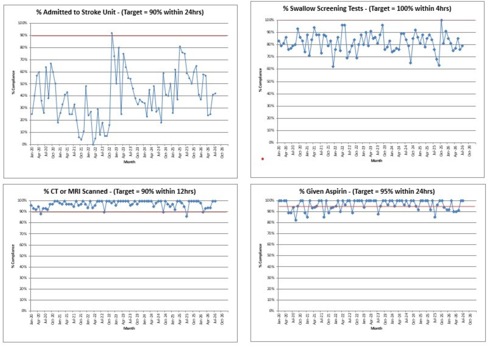
Has NHS Highland made any significant improvement in delivering the standard stroke care bundle or is 2026 yet another year of falling well short of target?
The main challenge to achieving the Stroke Bundle target remains timely access to dedicated stroke beds.
If just one stroke bed were consistently available within 24 hours, we would be able to achieve the national target.
The Stroke Unit is directly affected by increasing demand across our hospitals and ongoing bed capacity pressures.
These challenges are not unique to NHS Highland and are being experienced across NHS Scotland.
We are currently achieving 46% compliance with the Stroke Bundle. Further improvement is required in relation to timely access to the Stroke Unit.
Swallow assessment performance continues to be of a very high standard, 76%, with consistently strong results and the highest compliance rate in Scotland.
A Stroke Improvement Report is submitted yearly to the Scottish Government, covering 32 key areas and scored using a RAG system (Red, Amber, Green).
We are delighted to reassure NHSH does not score Red in any category, with 16 Amber and 16 Green. Since September 2025 our report has shown a further improvement across 10 key areas including TIA services, supported self management, Stroke Service Infrastructure and Psychological care. We continue to work with colleagues across NHSH to continue improving our Stroke Service.
Latest Stroke Bundle graphs
Open this image in a new browser tab.
In what way(s) are Scottish Government and NHS Highland seriously working together to achieve significantly better results for stroke patients?
An Annual Stroke Review is held each year, where an action plan is formed with the Scottish Government, data is shared, benchmarked nationally, with further improvements and opportunities discussed.
NHSH also hold a monthly Stroke Improvement Meeting including colleagues from our Rural Hospitals across Highland. Challenges and successes are shared and reflected back to the Scottish Government at regular meetings.
How many stroke patients in the Highlands could have benefitted from a thrombectomy failed to get this treatment due to location of treatment centres and times available?
The thrombectomy service model in Scotland is a ‘hub and spoke’ model of care delivery with spokes providing initial stroke treatment, diagnostics and referrals to three regional ‘hub’ hospitals performing thrombectomies.
Eligible patients that do not live in the host Board of a hub are transferred from ‘spoke’ hospitals across the country, though could be transferred directly to a hub depending on Scottish Ambulance Service (SAS) protocols or directly from emergency departments. The expectation is that patients will then be transferred back to either a spoke or NHS board hospital in the days following their thrombectomy procedure.
The hub hospitals where thrombectomies are performed are in Dundee (Ninewells Hospital), Edinburgh (Royal Infirmary of Edinburgh) and Glasgow (Queen Elizabeth University Hospital). Hubs are currently funded to provide an 8am-8pm service Monday to Friday with some (limited) provision at weekends.
Thrombectomy is regularly discussed as part of our Stroke Improvement meetings, the team work tirelessly to ensure no patients are detrimented.
Caithness General Hospital recently shared a case where a patient was thrombolised, transferred and seen at Ninewells in Dundee within 6 hours.
NHS Highland thrombectomy overview and targets
Treatment Window: Mechanical thrombectomy for acute ischaemic stroke is ideally delivered within 0 to 6 hours of symptom onset (with rare, carefully selected cases eligible up to 12 or 24 hours via specialized imaging).
Transfer Target: For patients transferred from spoke hospitals (like NHS Highland) to a hub, travel and transfer time should ideally not exceed 45 minutes.
National Service Plan: The Scottish Government announced a roadmap targeting a 24/7 national thrombectomy service by March 2027 (with implementation beginning in April 2027).
NHS Highland Hub Connection: NHS Highland (along with NHS Orkney and NHS Shetland) acts as a spoke board routed through the North of Scotland Hub.
In August 2026 ( our latest data), Raigmore Hospital thrombolised 3 patients, all under 90 minutes.
Caithness General Hospital saw two Stroke Events in August, both passed their Stroke Bundle.
Belford Hospital saw one event in August. Who also passed the stroke bundle.
Do NHS Highland’s booking staff check where patients live before scheduling appointments, so people travelling long distances from remote and rural areas aren’t given early slots that could mean an overnight stay?
As a standard we aim to avoid early morning appointments for patients who have a significant distance to travel wherever possible. Postcodes should therefore be checked when booking appointments, particularly when patients are being booked directly into an appointment slot. Many of our outpatient appointments however are booked directly over the phone with our patients through a choice system where patients are offered a choice of available appointment slots. In some circumstances patients may prefer an early appointment depending on personal circumstances.
In the Argyll and Bute Health and Social Care Partnership (HSCP) why have only 61.59% of staff had mandatory training and what action is being taken to rectify this poor performance?
New national statutory and mandatory training modules were introduced in March 2026 which resulted in a drop in % compliance across all areas of NHS Highland. This has been an area of focus with all staff being supported to complete the new modules and performance has improved every month since March and currently stands at 69.32% for Argyll and Bute HSCP.
Is the 61.59% mandatory training completion rate an average across all modules, and what are the figures for each, particularly fire safety and infection control, and how do they compare with other partnerships in NHS Highland and across NHS Scotland?
Fire safety is 81.21% and infection control is 65.12% in September 2026 and continuing to rise. This compares to fire safety is 86.08% and infection control is 72.65% in September 2026 for Highland Health and Social Care Partnership (HSCP). We do not have access to a single source of information for other Boards' compliance figures.
In the Argyll and Bute HSCP, why have only 30.86% of staff had their annual appraisal/PDP and what steps are being taken to rectify this poor performance?
Focussed work is underway with all areas to improve compliance with annual appraisal and PDP as we recognise this as an area of poor performance. Rates are gradually improving with A&B HSCP currently at 34.3%, however it is clear this needs to remain an area of focus and attention.
Why is the Argyll and Bute HSCP’s appraisal completion target set at 60%?
The Board agreed an improvement trajectory of 60% by March 2027 to reflect a doubling in compliance from the 30% baseline in March 2026 and 80% by September 2027 to reflect an achievable target.
Why has NHS Highland asked the single GP at Strachur, a busy rural practice in Cowal, to also cover two practices in Mid Argyll, and does it consider this sustainable for thousands of patients spread over such a large area?
Under the Scottish GMS contractual framework, a distinction should be made between a single-handed contract holder and a practice staffed by only one GP. A GMS contract can be held by an individual contractor, who may engage other GPs, locums and members of the wider practice team to deliver services. Single-handed contracting can be particularly important in remote and rural areas, where geography, population size and workforce availability can make other models difficult to sustain.
When the Furnace/Inveraray GMS contract became vacant in 2024, Argyll and Bute HSCP undertook a procurement exercise to identify a new contractor. The assessment panel included Primary Care management, clinical leadership and a patient representative. One application was received and progressed to interview, after which the panel concluded that it met the requirements for award of the contract.
The procurement therefore had no alternative bids against which to compare the application. Any decision to award or decline a contract must be based on the requirements of the procurement and GMS framework. The absence of other bidders does not remove the requirement for an application to meet those standards, but equally a sole application that meets the stated requirements must be considered objectively and fairly.
The contract holder is responsible for making appropriate arrangements to provide services to the registered population. NHS Highland's role is to oversee the contractual arrangements and, where concerns arise about access, quality or contractual compliance, to address these through the appropriate contractual and governance processes.
Did the Chair or senior executives meet members of the public at Inveraray Castle on 20 May 2026 to discuss concerns about service safety, and then ask them to deny the meeting took place and not to contact them by email? If so, how is that consistent with their duty of candour and responsibilities as public servants?
The Chair accepted an invite to a meeting from a group of community members across Strachur, Inveraray and Furnace practice areas. She attended at a venue of the group’s choosing and was supported by the Chief Officer of Argyll and Bute HSCP and the Board Medical Director.
This is normal practice and the Board Chair meets with individuals and groups across NHS Highland to understand the ways in which different groups experience our services. The Board Chair was an invitee and therefore arrangements for the venue and agenda were made by the group.
Individuals meeting the Board Chair often share personal experiences of their health care. It is vital for NHS Highland’s senior team to hear these stories, as they shape the ways we make decisions and drive change, but they would never be discussed or shared without consent.
Why has there been no chronic disease management service available in Strachur/Strathlachlan/Cairndow for three years?
Chronic disease management is a core responsibility of the GMS contract holder, and is not a standalone service. This includes the ongoing clinical assessment, review and management of patients with long-term conditions. The HSCP supports this work through the provision of Community Treatment and Care (CTAC) services, which undertake routine clinical procedures and monitoring following referral from general practice. In Strachur, Inveraray and Furnace, CTAC had previously been delivered directly by the GP practices under an agreed rural flexibility arrangement. In 2026, following the practices' withdrawal from that arrangement, responsibility for organising and delivering CTAC transferred to the HSCP, which has put alternative provision in place.
There is not currently a nationally defined measure or single set of quality indicators that enables the HSCP to quantify the delivery or quality of chronic disease management by individual GMS contractors. Work is, however, progressing nationally to develop clearer quality indicators for general practice, including aspects of chronic disease management. Argyll and Bute is actively supporting and contributing to these discussions through our national lead forums. This should provide a stronger and more consistent framework for assurance and quality improvement in future.
What lessons can be learned from the breakdown of basic primary care services in the Argyll and Bute HSCP? Will there be a critical incident review to attempt ensure there is no repeat?
There are clear lessons from the recent difficulties, particularly around the resilience of remote and rural services, early identification and escalation of workforce risks, communication with patients and communities, contingency planning, and clarity of responsibilities between independent contractors and HSCP-provided services. Engagement is ongoing with wider stakeholders, including the Scottish Government Primary Care Division, which sets the national contract, and the Scottish Public Services Ombudsman (SPSO), which defines the national complaints handling procedure to share the experiences of our local communities and the unique needs of remote and rural communities.
In relation to a critical incident review, the position remains under active governance and risk review. Service access, staffing, patient safety, complaints and community feedback are being monitored, while longer-term options are being considered through formal appraisal and impact-assessment processes.
Should there be an independent enquiry into the breakdown of basic NHS services in the Argyll and Bute HSCP so that lessons can be learned, recommendations for action can be published, people can be held to account for delivering better outcomes, and broken relationships rebuilt with local communities?
There are already active governance, risk, service-review and external-review processes relating to aspects of the current position. Any decision on a further independent enquiry would need to consider the scope of those existing processes, the evidence available, proportionality and what additional assurance or learning an enquiry would provide. We recognise the importance of learning from events and rebuilding confidence through transparent engagement and demonstrable service improvement.
Given the breakdown of basic services, has NHS Highland considered asking to be put in special measures to get help to resolve long standing deficient NHS service provision?
From a primary care perspective, the current approach in Argyll and Bute is active escalation and risk management through existing NHS Highland and HSCP governance arrangements, alongside stakeholder engagement with the Scottish Government. The immediate priority remains maintaining safe access while developing a more sustainable model for the affected rural communities.
NHS Highland and Argyll and Bute HSCP’s last workforce plan covered 2022 to 2025. Why is there no current plan, and when will a new one be published?
Work is underway to refresh our workforce plan with an expectation of publishing this by quarter 1 of 2027/2028. However, the key challenge all boards face is availability within the wider labour market and competing with other sectors to attract people to work in health and social care.
Argyll and Bute as a growing older population and a low working age population of 67.8% compared to Scottish figure of 74.7%. The working age population is also falling year on year with a reduction from approximately 52,000 to 51,000 over the last 5 years.
Our employability strategy and action plan is aiming to enhance our ability to attract people into our workforce with earn while you learn routes into employment and creating more apprenticeship opportunities to attract people living in Argyll and Bute (as well as Highland area) into the workforce. However, many roles continue to be difficult to recruit to from either the local population or wider afield from Scotland and the UK. We have had some success with a dedicated international recruitment service established some years ago which continues to attract staff to work for NHS Highland.
In summary, we do have information on our workforce in relation to what is required to deliver health and care services and the workforce we currently have in post which shows persistent gaps due to workforce availability which we are seeking to address through a range of workforce initiatives and where appropriate considering service and workforce redesign. This will be brought together in an overarching summary workforce plan.